
Earning Blisters for the Birds
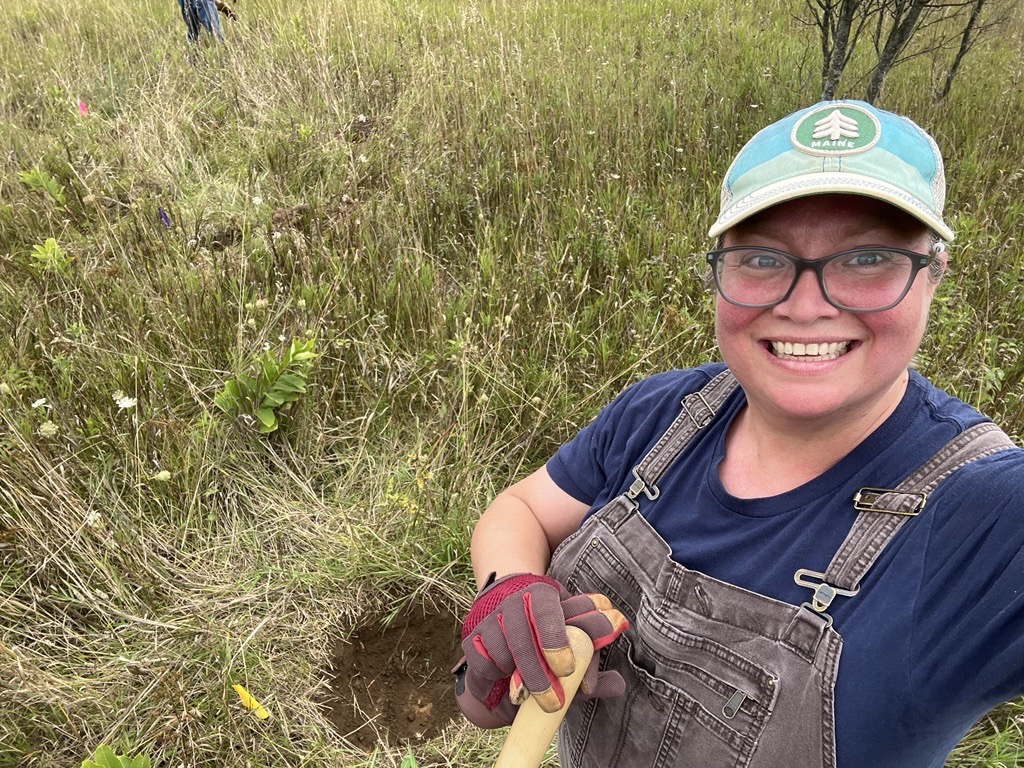
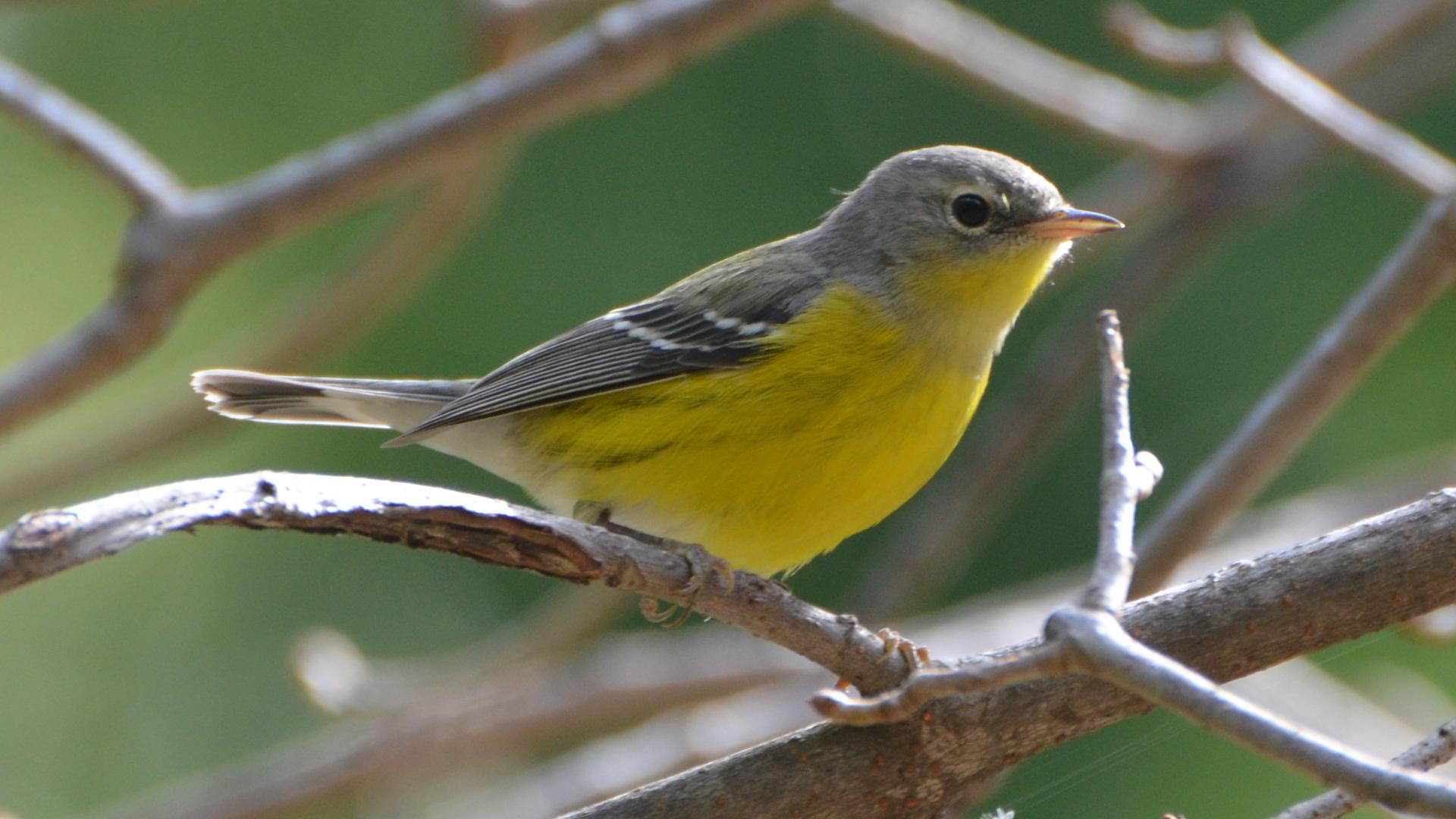
(Top) Author Carrie smiles, not only because of the satisfying work she’s doing, but also because she enjoys the chance to get in the field! (Botton) A magnolia warbler, which relies on shrubs for food and cover during migration, including on Washington Island!
It took our stewardship team—plus 17 volunteers and three borrowed office workers—six days to complete a large restoration project on Washington Island, planting native shrubs for the benefit of millions of migrating birds.
I was lucky enough to join staff and volunteers for two workdays on Washington Island. First, 230 holes needed to be dug. So many roots and rocks—my pickaxe definitely earned its keep that day! It was hard work but satisfying to be outside working alongside such dedicated folks. I spent another day planting shrubs. I thought planting would be easier than digging—wrong! Planting shrubs so they have the best chance to survive had more steps than I realized.
As an office worker, I spend most of my days at a computer. It was a joy for me to spend those days in the sunshine on the land. Having said that, I was absolutely wiped out at the end of those two days. The experience gave me an even greater respect for the Stew Team. They work so hard without complaint, and with pure dedication to improving habitat. It’s inspiring—and honestly just amazing—to work with people like that.
“Through this experience, it became clear to me just how much thoughtful planning goes into these restoration projects…”
Through this experience, it became clear to me just how much thoughtful planning goes into these restoration projects, especially when they take place on Washington Island. It’s far more than simply planting shrubs. It involves coordinating with the nursery, staff, and volunteers; preparing equipment; and then transporting everything—shrubs, tools, hoses, buckets, vehicles, and more—across to the island.
Watching Thomas skillfully maneuver trailers onto the Washington Island Ferry and seeing Tina zip around the preserve in the Mule (utility vehicle) to deliver supplies to each planting area so we could work more efficiently—it was all genuinely impressive. I’m incredibly proud of our Stew Team and dedicated volunteers for completing this restoration project with such care and attention to detail.
Each year, millions of birds migrate along the Mississippi Flyway, and Washington Island provides an essential stopover along their route. The shrub planting we completed at the Domer-Neff Preserve will strengthen this important habitat for years to come. I am grateful to have been part of that meaningful work—it was well worth the blisters and backache.
Written by Carrie Ehrfurth
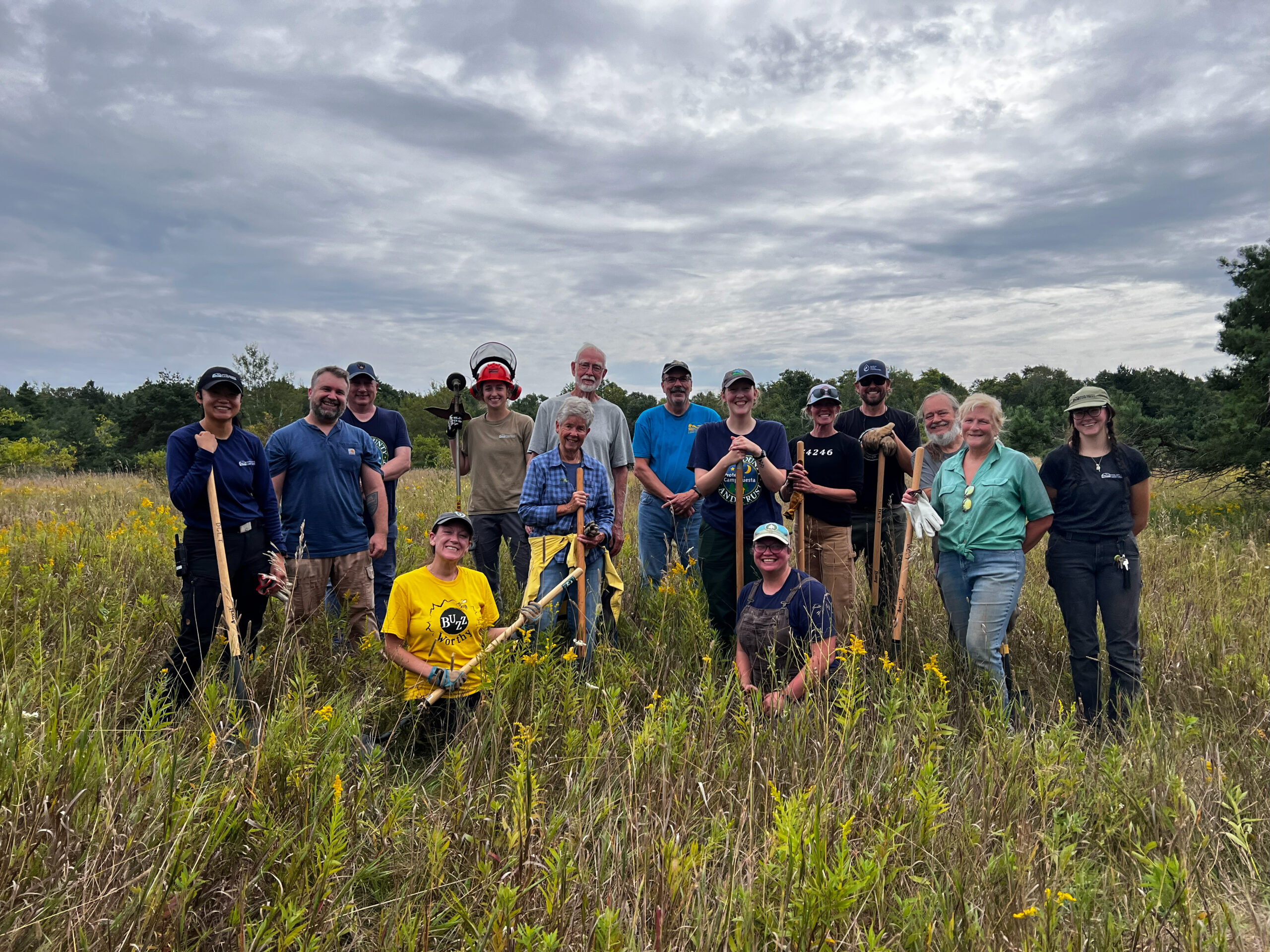
A happy group of volunteers and staff, smiling with their shovels after a tough workday digging holes in the shallow, rocky soil at Domer-Neff Bird Sanctuary and Nature Preserve.

Explore this preserve
Domer-Neff Nature Preserve and Bird Sanctuary
52 acres · Town of Washington
0.6 mi · hiking · birding
Open in Preserve Explorer →