
How We Save Land
Door County is a rare and remarkable place. Protecting it takes long-term vision, diverse tools, and local care.
Our Work
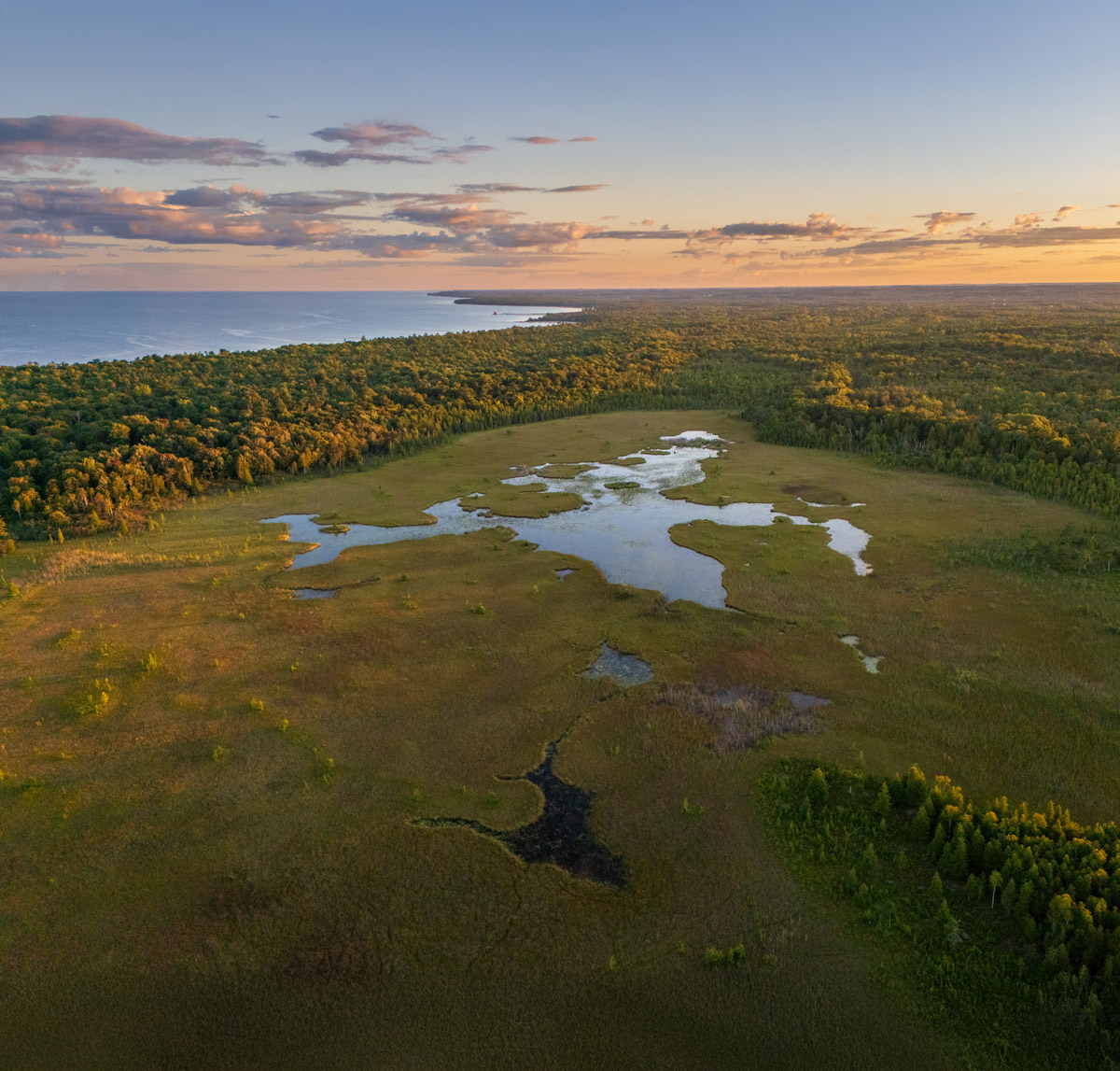
Door County is among the most ecologically significant counties in Wisconsin, with extraordinary shoreline habitat and biodiversity.
But its beauty and biodiversity are under constant pressure from development, climate shifts, and habitat fragmentation. Every protected acre contributes to clean water, climate resilience, biodiversity, and future generations' right to experience this land.
We do two things: protect land and care for it — permanently.
Our Impact
Four Decades of Conservation
-
- acres protected forever
- conservation easements
- nature preserves
How We Protect Land
Identify & Negotiate a Land Purchase, Land Donation, or Conservation Easement
A data-driven, strategic process known as Land Priority Planning guides DCLT's work. Across Door County, we've identified the areas where our highest conservation priorities overlap on the landscape. Surface and groundwater resources, Niagara escarpment, contiguous forest, migratory bird habitat, wetlands, fish habitat, and critical habitat for endangered species are among our top conservation targets.
Using the Land Priority Plan as its guide, DCLT evaluates each potential project to determine the conservation merits and how it fits within our mission. If a property is a strong conservation opportunity, DCLT explores available funding and prioritizes projects based on both conservation impact and available resources. We ask landowners to consider DCLT if they would like to sell, donate, or protect their land through conservation easement in the future. Early conversations help us plan for future conservation opportunities.
If a landowner chooses to sell, DCLT can enter into negotiations. When purchasing land, DCLT is bound by its non-profit status to pay the appraised value of land—no more—ensuring that priority lands are protected at fair prices and that the public and private investment in DCLT is used efficiently.
Costs associated with accepting land donations and conservation easements are generally lower, but for each property DCLT incurs the cost of surveys and site assessments, legal work, and a required contribution to the Stewardship Endowment Fund for long term management of the protected lands.
Secure Long-term Protection
Once a property is protected through purchase, donation, or conservation easement, DCLT begins the work of securing its long-term care. For all protected properties, including privately owned conservation easements, staff mark boundaries and install signage to clearly identify the conservation area. As part of the long-term protection process, staff conduct baseline studies to document a property's natural features and current ecological conditions and map invasive species using GIS technology. For DCLT-owned properties, staff also develop long-term management plans and, where appropriate, install trails, parking areas, and wayfinding signs to provide safe public access and connect people with the land.
Perpetual Stewardship
Protecting land is only the beginning. Each year, DCLT staff monitor all protected properties, including privately owned conservation easements, by walking boundaries, checking for encroachments, and documenting the condition of the land to ensure its conservation values are maintained. For DCLT-owned lands, staff also implement land management plans, carry out landscape-scale restoration projects, manage invasive species, and protect rare and endangered plants and animals. This work is supported by DCLT's Stewardship Endowment Fund, which helps ensure that protected lands are cared for and monitored in perpetuity.
"The pace of conservation in Door County is no longer determined by grants or government programs—it is determined by individuals. In a moment of unprecedented threat and extraordinary opportunity, donors are the reason forests remain standing, waters stay clean, and wild places endure."
— Emily Wood, Executive Director

Where We Focus & Who We Work With
On a peninsula with over 300,000 acres and development pressure increasing, we can't protect everything. So we focus where it matters most.
Priority Conservation Areas
When several conservation targets overlap in one place — a groundwater-fed creek that supports rare species, native forest, fish spawning habitat, and bird habitat, like at Three Springs Nature Preserve — we identify that place as a priority conservation area.
The Land Trust has identified 32 priority conservation areas across the peninsula and islands. These are the places most critical to Door County's ecological wellbeing. Focusing protection efforts here ensures our resources have the greatest conservation benefit.
A Collaborative Approach
Our plan for land protection includes input from other conservation organizations. Scientific data — hydrological studies, biological inventories — has been shared between Door County's conservation groups to plan protection strategies together. We collaborate with The Ridges Sanctuary, Crossroads at Big Creek, Wisconsin DNR, U.S. Fish & Wildlife Service, and The Nature Conservancy.
Project Review & Governance
Every potential project goes through a thoughtful review process before we take action. A new project first goes to the Land Policy Committee for evaluation, then to the Board of Directors for a final vote.
How Will You Help?
Whether you protect your own land, volunteer, or make a gift — you are part of Door County's conservation story.