
Nothing matches that day.
Loosen the search or try another idea.
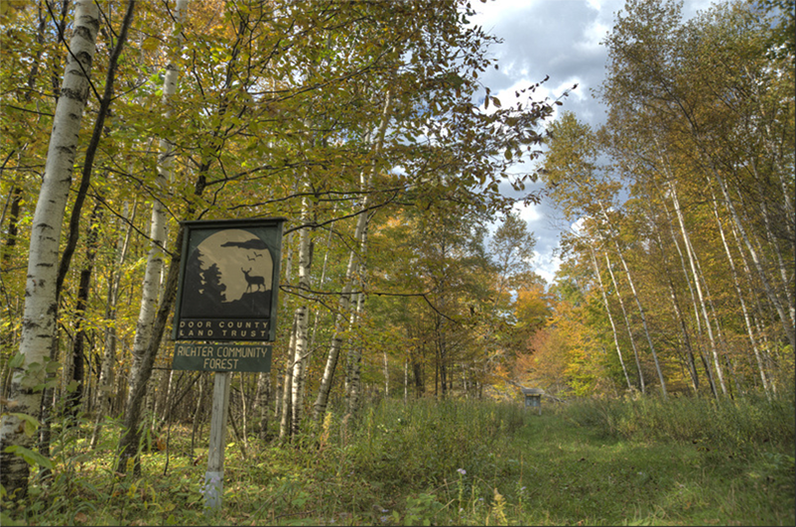
Richter Community Forest Nature Preserve
Ancient forest, uncut and unhurried
One of the largest undeveloped tracts on Washington Island, this 159-acre forest was never clear-cut — and the landscape tells that story through massive tip-up mounds, abundant spring wildflowers, and bedrock ridges that were once a glacial lakeshore.
One of the largest tracts of undeveloped land on Washington Island, the Richter Community Forest Nature Preserve protects 159 acres of northern hardwoods — and the landscape itself tells the story of what it means for a forest to be left alone.
The large tip-up mounds scattered through the preserve — the root masses of uprooted trees — are evidence that this forest was never clear-cut or tilled for agriculture. That distinction matters for wildflowers: when land is tilled, seed banks are disturbed, and it can take a century or more for wildflowers to re-establish. The abundance of spring wildflowers here is not just beautiful — it is a living record of undisturbed soil stretching back generations.
Look down and the story continues. Small outcrops of bedrock ridges and beach stone along the forest floor are remnants of a time, 3,000–5,000 years ago, when this land lay beneath the waters of glacial Lake Nipissing — the predecessor to modern Lake Michigan. As lake levels dropped, old shorelines were left behind, and Richter Community Forest preserves them still.
The Richter Community Forest was gifted to the Washington Island and Door County communities in 2001, and continues to serve as an educational resource for island school children.
Trails
A 1.5-mile loop winds through rolling terrain, connecting to the Town of Washington’s Heritage Nature Trail for extended exploration.
Getting There
Take the Washington Island Ferry from Northport.
Flora
The forest composition varies across the preserve, reflecting different management histories over the past century. Northern hardwoods include sugar maple, American beech, red oak, white cedar, hemlock, white pine, basswood, and ash. Spring wildflowers include trillium, bellwort, downy yellow and long-spur violets, Solomon’s seal, baneberry, wild sarsaparilla, and Canada mayflower.
Trail Map & Gallery
Guidelines for Visiting
- Stay on trails
- Help protect fragile habitats by staying on marked trails.
- Clean your boots
- Brush off mud and seeds before and after your visit to prevent spreading invasive species.
- Pets on leash
- Dogs are welcome on leash. Please pick up after your pet.
- No collecting
- Leave wildflowers, plants, rocks, and artifacts where you find them.
- Leave no trace
- Carry out everything you carry in.
- No motorized vehicles
- Bicycles, ATVs, and other motorized vehicles are not permitted.
- No camping or fires
- Preserves are open dawn to dusk. No overnight camping or open fires.
- Hunting season
- During hunting season, wear blaze orange on preserves with active hunting. Learn more →