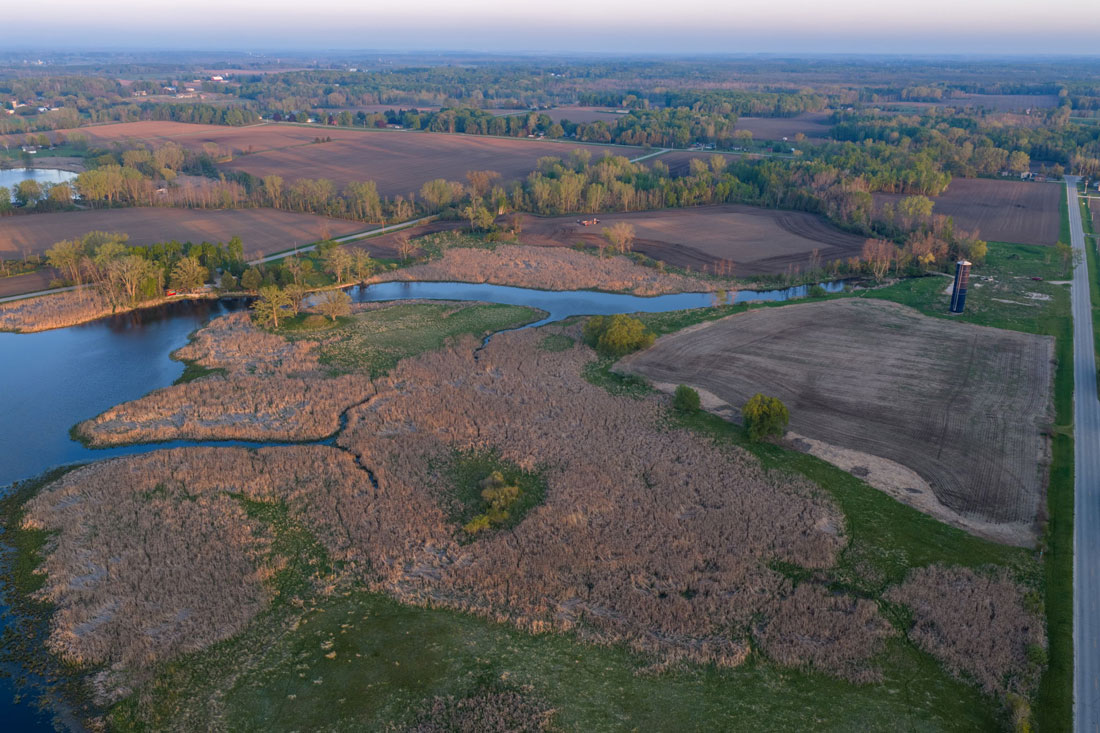
 Photo by Dan Eggert
A Rare Chance to Protect Little Sturgeon Bay
338 acres of working farmland, clean water, and one of Green Bay's most important fish nurseries. Protected forever.
Double My GiftWhere the creek meets the bay
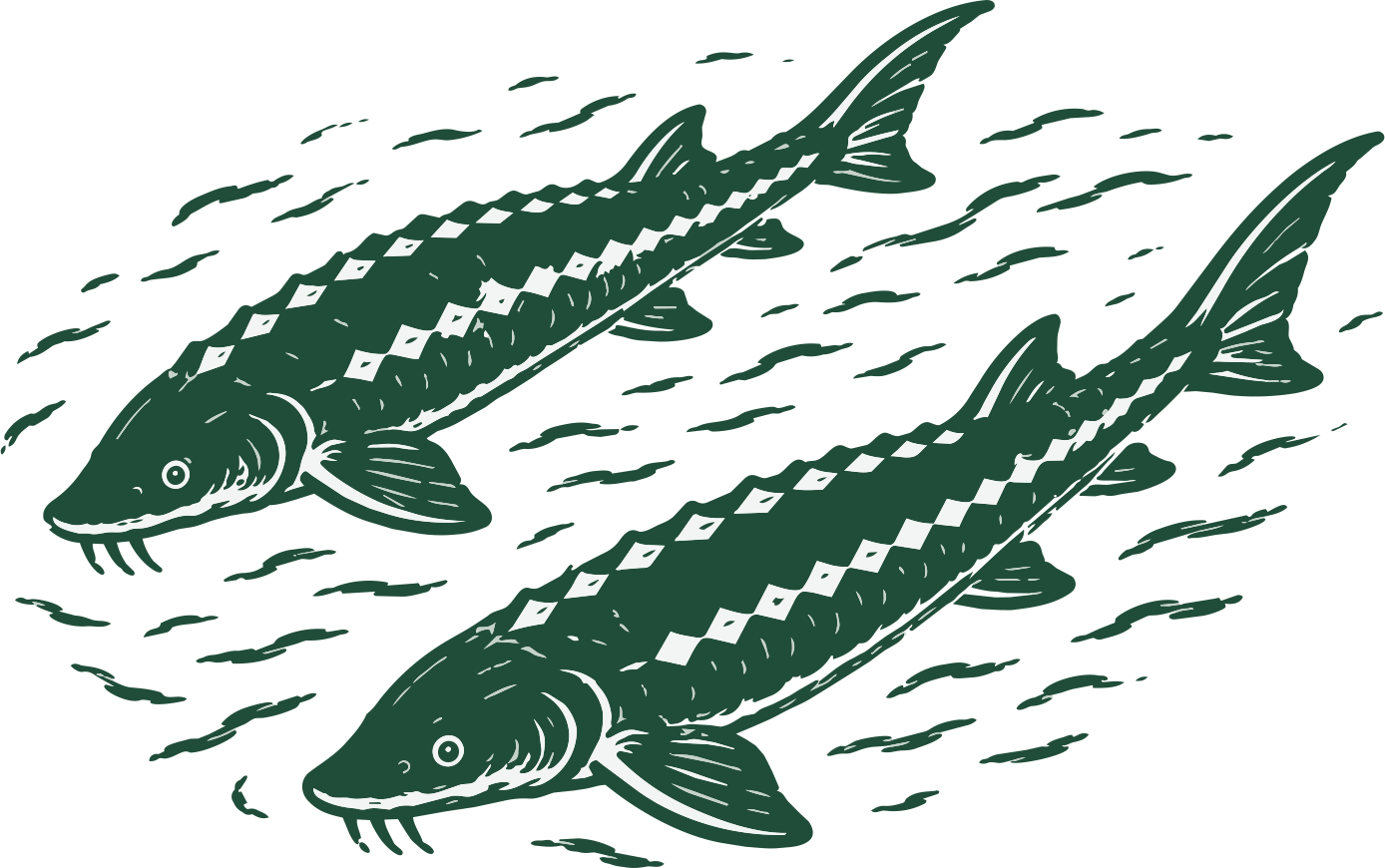
Along the southern shore of Door County, Kayes Creek and Twin Harbor Creek wind quietly toward Little Sturgeon Bay. Beneath the surface lies one of the most important fish spawning grounds in all of Green Bay. Every spring, trout, walleye, and northern pike return here to begin the next generation. Above the water, 85 acres of wetland filter what flows to the bay, and open fields wait to become native prairie alive with grassland birds.
For a lifetime, this land belonged to one family. Kermit and Cleo Franda started with an 80-acre dairy farm and grew it, acre by acre, into the 338 acres we now have the chance to protect. Rather than watch it be subdivided and sold off piece by piece, the Franda family chose to work with the Land Trust to keep it whole.
That choice is a gift. It is also only the beginning.
Why this moment matters
Working lands like these are disappearing. As they grow harder to maintain, they come up for sale, and too often they are carved into lots and lost. Once land is divided, it can never be made whole again.
At the same time, the support conservation has long depended on is falling away. After 37 years, Wisconsin's Knowles-Nelson Stewardship Fund ended without renewal on June 30, 2026. From here forward, protecting places like Little Sturgeon Bay depends on people who care. It depends on you.
What your gift protects
- ✓ 338 acres protected forever, never subdivided
- ✓ Clean water flowing to Little Sturgeon Bay and Green Bay
- ✓ One of Green Bay's most important fish spawning grounds
- ✓ 85 acres of wetland, with fields restored to native prairie
- ✓ Working farmland kept in sustainable agriculture
- ✓ Door County's future 16th public preserve, with trails to explore
Proposed
A vision of restoration and recreation
If protected, the Land Trust is proposing a restoration plan that will progress in phases over several years. The health of the creek is a top priority, where wetland restoration and watershed-friendly agricultural practices will be established early on.
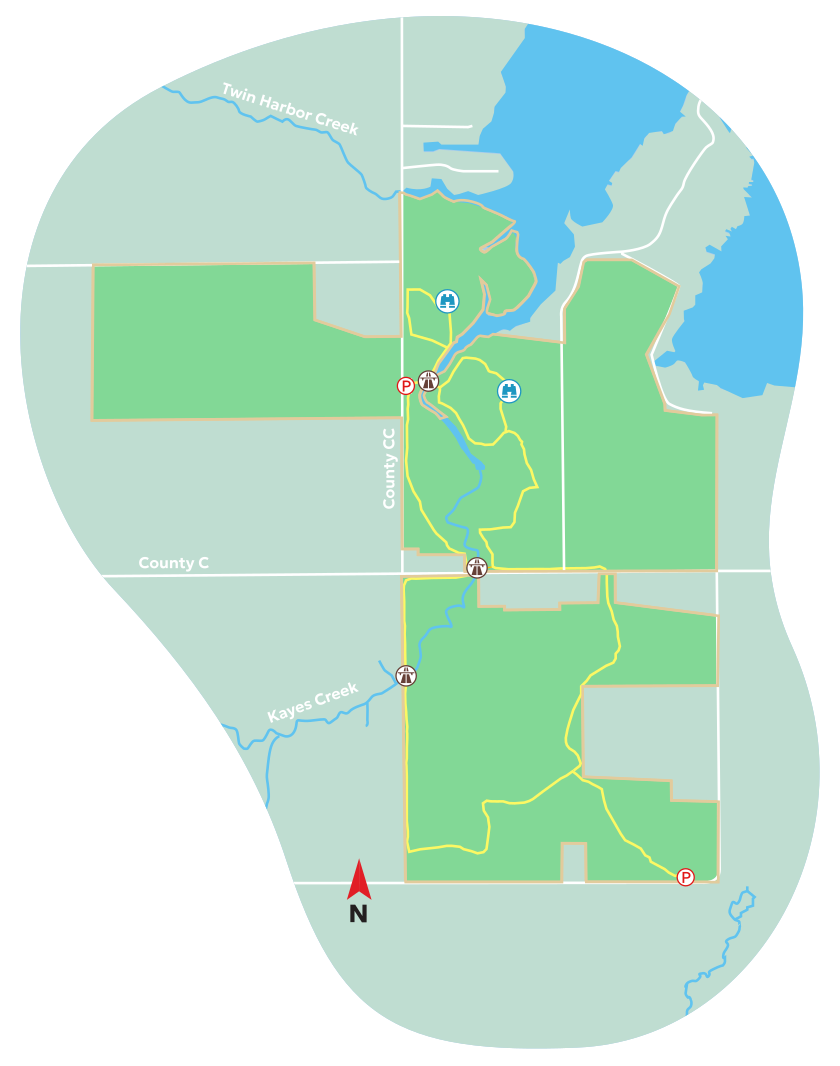
- Yellow line
- Proposed trail
- Red P
- Proposed parking lot
- Blue circle
- Proposed observation platform
- Brown circle
- Bridge
Phases
- 1. Opening the preserve (years 1–2): Create northern parking lot & hiking loop, signage, begin habitat restoration, & install watershed-friendly agricultural practices in areas that remain farmland.
- 2. Expanding restoration (years 2–3): Extend trails to southern portion, construct second parking lot, restore wetlands, & improve streambanks.
- 3. Completing the vision (years 3–5): Restore eastern fields, expand pollinator habitat in former agricultural fields, control invasive species, & continue guided hikes and educational programming.
Wetlands, rain, and even drought can change trail creation, placement, and restoration work. These plans are subject to change.
- Miles of trails will wind through forests, wetlands, streams, and restored prairies, inviting visitors to explore Door County's remarkable natural landscapes. Open year-round and free of charge, the preserve will welcome hikers, birders, photographers, families, and nature lovers of all ages.
- Former agricultural fields will be transformed into native prairie and pollinator habitat, while streambanks will be replanted with native trees and shrubs and wetlands restored. These restoration efforts will reduce erosion and improve water quality, strengthen wildlife habitat, and enhance the ecological health of the Little Sturgeon Estuary and the Bay of Green Bay.
- Bridges and boardwalks will provide access through forests, wetlands, and stream corridors while protecting sensitive habitats. These improvements will allow visitors to experience the preserve's diverse landscapes while minimizing impacts on the natural environment.
- Outlook platforms will offer places to pause, observe wildlife, and take in sweeping views of the Little Sturgeon Estuary and surrounding landscapes. These spaces will help visitors connect with the watershed while learning about the importance of protecting clean water and wildlife habitat.
- Public fishing access will give families and anglers the opportunity to experience one of the Bay of Green Bay's most productive fisheries. Kayes Creek and the Little Sturgeon Estuary provide vital habitat for northern pike, walleye, naturally reproducing muskellunge, and many other native fish species.
Give now, and give twice
We must raise the funds to protect this property by December 2026. Right now, every gift is matched dollar for dollar, up to $500,000, so your impact goes twice as far. Please give what you can, and help turn this rare opportunity into a preserve that lasts for generations.
Protect Door County's Wild Places
Renew your membership, start one, or make an additional gift.
We'll email your receipt here.
Your gift helps protect forests, wetlands, shorelines, and working lands across Door County.
Door County Land Trust is a 501(c)(3) nonprofit.
Your gift is tax-deductible. Secure payment via Stripe.
Would rather become a member or make a general gift? Give another way →
Prefer to give by phone or mail? Call (920) 746-1359, or mail a gift to
Door County Land Trust, PO Box 65, Sturgeon Bay, WI 54235.