
New Land Protected in Kellner Fen Natural Area
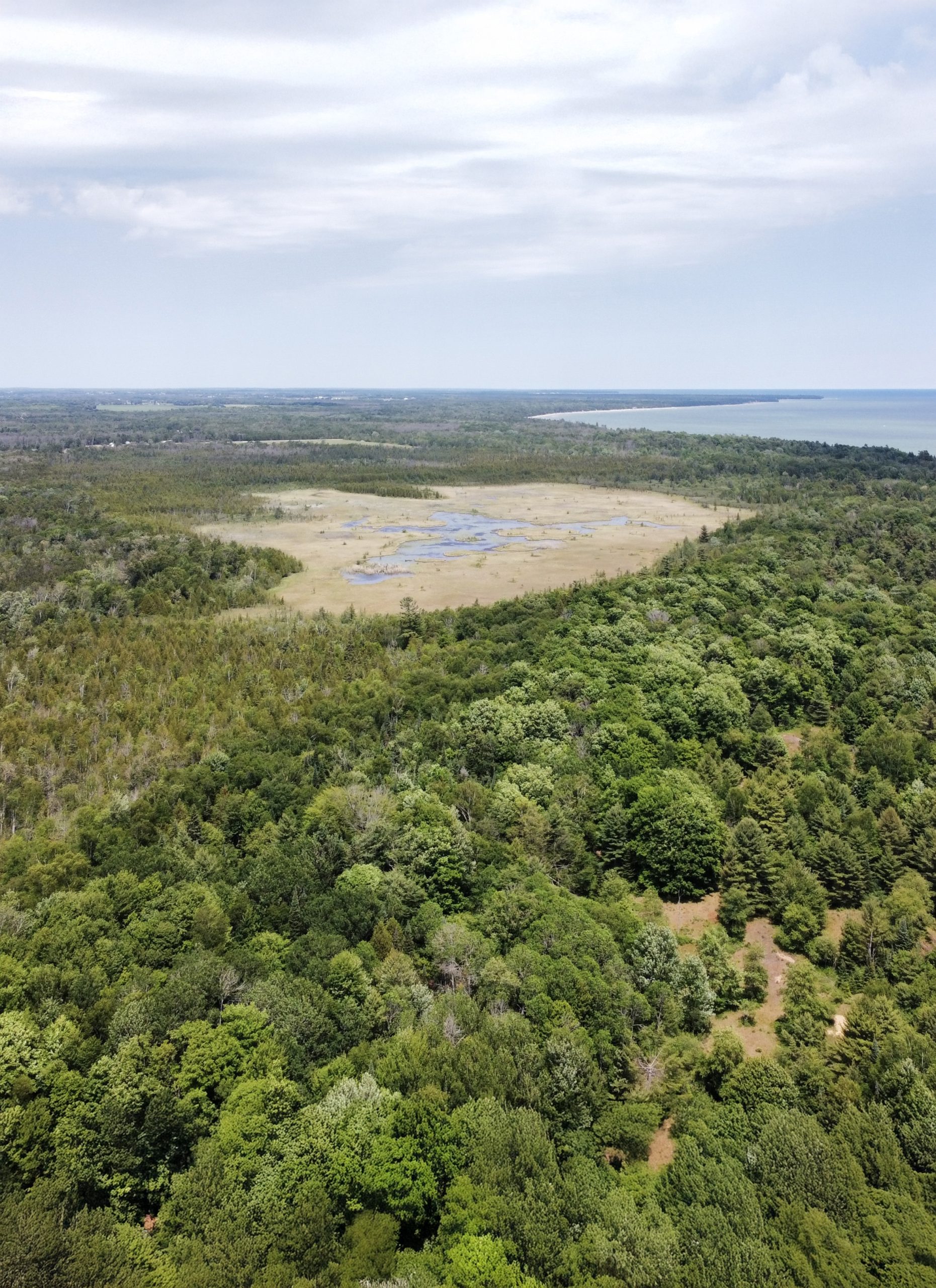
Aerial view of Kellner Fen Natural Area by Jeff Lutsey.
Fascinating Fen Forever ProtectedRecently, Door County Land Trust protected a small but significant four-acre parcel just north of the Sturgeon Bay Ship Canal near the Lake Michigan shoreline. This acquisition fills a vital gap in the Land Trust’s conservation project area surrounding Kellner Fen—an embayment wetland shaped by glacial meltwater which, over thousands of years, created a ridge-and-swale landscape that now separates the fen from the lake. With support from grants and generous donors, this rare freshwater ecosystem will be permanently protected and carefully stewarded to remain wild and intact.
Door County Land Trust is committed to the long-term resilience of Kellner Fen and its surrounding woodlands. Staff observed invasive species like buckthorn, European marsh thistle, and reed canary grass in the area. Future stewardship efforts will include inventorying these and other invasives, then planning for their control.
Passionate People Preserving the Fen!
Since 2023, acquisitions in the Kellner Fen Project Area have been supported by a donor-created restricted fund. John and Xan Fischer, who originated the fund with a $350,000 donation, fostered a matching campaign which enables continued preservation of this wild wetland area. Some of these restricted funds were used to acquire the new property, with 75% of the purchase price covered by NRDA grants thanks to the Fox River Natural Resource Trustee Council.
If you would like to contribute to the ongoing protection of Kellner Fen and other projects, visit our donation page. Your gift helps keep Door County wild, and through July 31 all gifts will be DOUBLED thanks to generous donor Mary Prindiville! The Land Trust is also hosting a unique opportunity for members to experience a guided hike at Kellner Fen Natural Area on August 21st. Find out more and register here. If you aren’t a member, make a donation today to join!
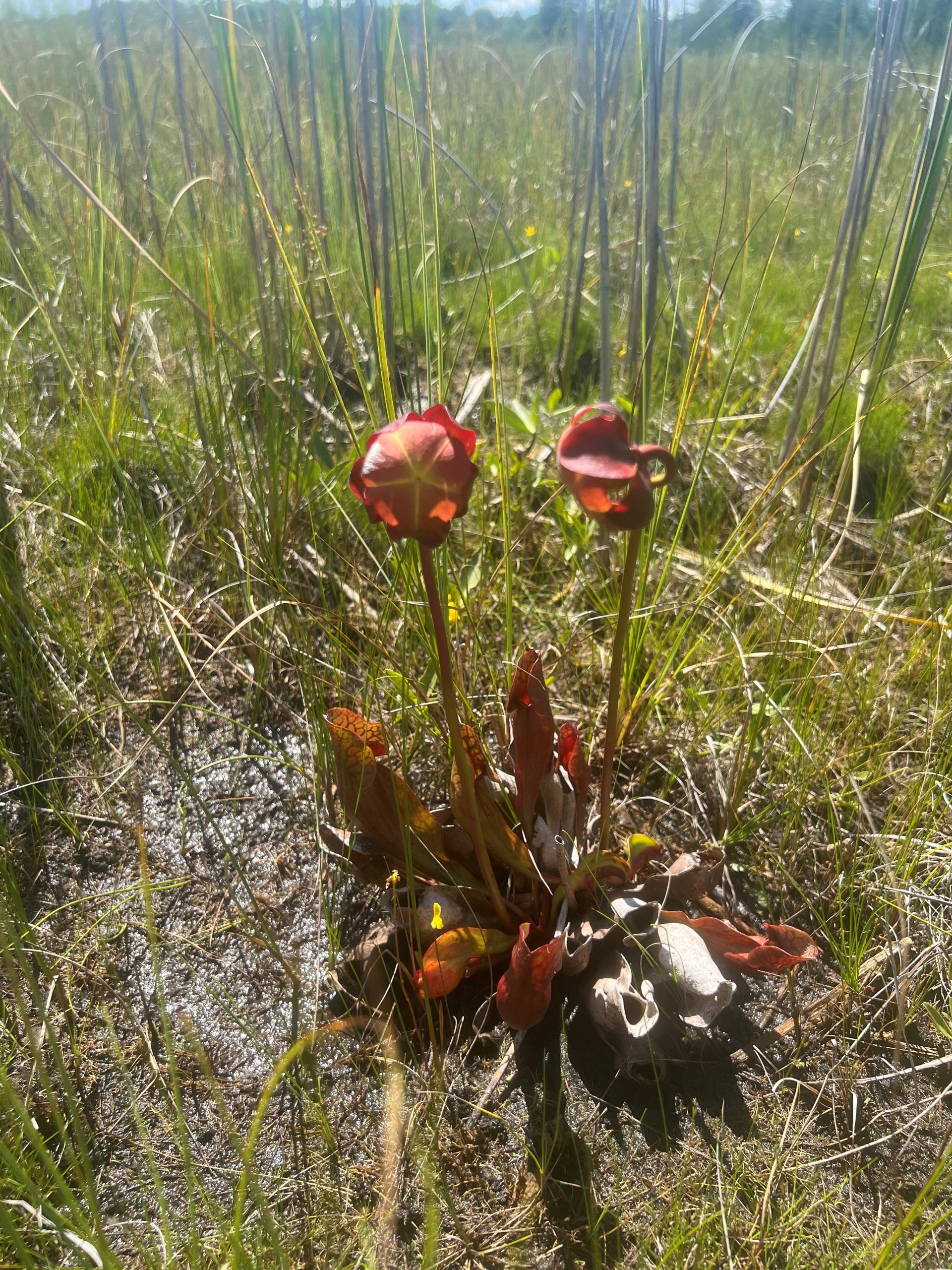
Pitcher plant in bloom by Tina Lee.
What IS a Fen?A fen is a type of peat-producing wetland that is fed by groundwater. Peat is an accumulation of wetland vegetation like mosses and sedges that only partially decompose due to a fen’s anaerobic (low-oxygen) environment. This water-logged environment doesn’t allow the usual oxygen-dependent bacterial and fungal decomposers to break things down; instead, like the yeasts fermenting kombucha, microbes in a fen are breaking material down very slowly. This allows for dead plant materials to accumulate, creating an environment all their own. Floating mats of living sedges grow on the dead materials, and diverse microenvironments exist where invertebrates, carnivorous plants, and unique species thrive.
Rich Fen, Poor Fen
Fens are ecologically rich wetlands where plant and animal communities vary depending on groundwater chemistry. The pH of the water—shaped by the type of bedrock it passes through—plays a key role in determining species composition. “Rich” fens, fed by calcium-rich groundwater from limestone or dolomite, are more basic in pH and tend to support high biodiversity, including rare and endangered species. In contrast, “poor” fens are more acidic and typically support fewer species.
Kellner Fen is considered a rich fen due to the alkaline limestone bedrock through which its waters flow. Its richness is evident in the diversity of organisms present, including rare orchids, carnivorous pitcher plants, and the endangered Hine’s emerald dragonfly—once thought to be extinct.
The Timeline of a Fen (It’s Really Long!)
Besides the wild splendor found at Kellner Fen, this area is worth protecting due to its significance as a water resource, a wildlife corridor, and as a piece of Door County’s natural history.
To form the unique sedge-mat community here, materials had to accumulate over hundreds, if not thousands of years without disturbance. According to some statistics, peat forms at a rate of only 1 mm per year! The floating sedge mat found in Kellner Fen is mysterious, holding years of history (and maybe even a small airplane that is rumored to have crash landed here decades ago!) in its oxygen-depleted waters.
Human activities, such as development or drainage, can have detrimental effects on the fen by disrupting its groundwater flow. If this hydrologic connection is interrupted, the fen could become ombrotrophic—relying solely on precipitation—which would lead to acidification and a shift in its species composition and overall biodiversity. By protecting this area, Door County Land Trust ensures the region will never be developed, and the fen and its unique ecosystem will remain undisturbed and intact far into the future.
Fens: A Carbon Sink
Beyond their ecological richness, fens also play a vital role in climate regulation. Undisturbed fens act as carbon sinks, storing more carbon than they release. Their waterlogged, anaerobic conditions slow the decomposition of plant material, allowing carbon to remain locked in the soil for centuries. But when a fen is disturbed, it can rapidly flip from a carbon sink to a carbon source, releasing stored carbon back into the atmosphere.
Kellner Fen Natural Area is stewarded for its ecological values, including groundwater resources, migratory bird habitat, and connected native forests. Natural areas do not have maintained hiking trails or parking lots. To find our hiking trails, see our list of nature preserves: Portfolio - Door County Land Trust