
Ephraim Nature Preserve at Anderson Pond
Wetland refuge at the heart of a historic village
This intimate 26-acre preserve surrounds Anderson Pond with wetlands, old-growth hemlock, an ancient cobblestone beach ridge, and a Niagara Escarpment edge — all woven through with the founding history of Ephraim itself.
In the heart of a busy village, the Ephraim Preserve at Anderson Pond is a quiet refuge of wetlands, old fields, forest, and escarpment. But its history runs deeper than most nature preserves — this land is inseparable from the founding of Ephraim itself.
In 1853, the Norwegian missionary Rev. Andreas Iverson arrived at Eagle Harbor with a small congregation, drawn by the beauty of the forested wilderness. They established a tiny village and named it Ephraim. Among those who joined them was a hard-working Norwegian named Aslag Anderson. In 1858, Iverson and Anderson struck a deal: Anderson would build a deep-water pier for the village, and in exchange, Iverson sold him 110 acres of land at its original cost — $1.15 per acre.
Anderson completed the pier the following year, along with a house, barn, and general store. He cleared land around a pond for farming. That pond and its surroundings are now the Ephraim Preserve at Anderson Pond — a historic farm returned to nature, retaining the Anderson family name and its connection to the village’s origins.
Trails
A 1-mile loop circles Anderson Pond on fairly level terrain, passing through wetland forest, old fields, and along the base of the Niagara Escarpment. Look for interpretive signs explaining the wetland ecology and the land’s history.
Terrain
Fairly level throughout, with some boardwalk sections through the wetland edges. Accessible for most abilities.
Wildlife & Flora
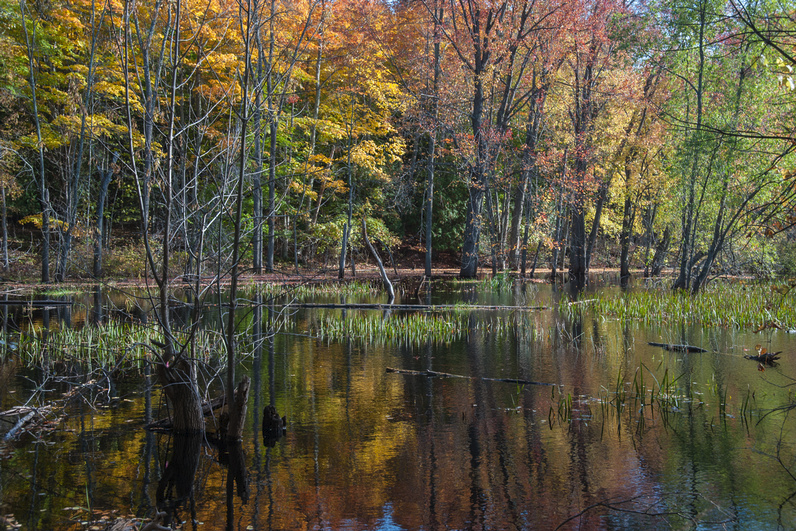
What was once a farm now shelters migrating and nesting birds, with impressive waterfowl diversity particularly in spring. Wildflowers bloom across the open fields, and magnificent hemlock, white cedar, and hardwood trees stand on portions of land that were never cleared.
Natural Features
An ancient cobblestone beach ridge traces a former shoreline of Lake Michigan through the preserve. The craggy Niagara Escarpment cuts across the eastern edge, creating the same dramatic geology found throughout Door County’s spine. Remnants of the Anderson family farmstead are still visible on the land — a tangible thread connecting this place to the village it helped build.
Trail Map & Gallery
Guidelines for Visiting
- Stay on trails
- Help protect fragile habitats by staying on marked trails.
- Clean your boots
- Brush off mud and seeds before and after your visit to prevent spreading invasive species.
- Pets on leash
- Dogs are welcome on leash. Please pick up after your pet.
- No collecting
- Leave wildflowers, plants, rocks, and artifacts where you find them.
- Leave no trace
- Carry out everything you carry in.
- No motorized vehicles
- Bicycles, ATVs, and other motorized vehicles are not permitted.
- No camping or fires
- Preserves are open dawn to dusk. No overnight camping or open fires.
- Hunting season
- During hunting season, wear blaze orange on preserves with active hunting. Learn more →