

Nothing matches that day.
Loosen the search or try another idea.
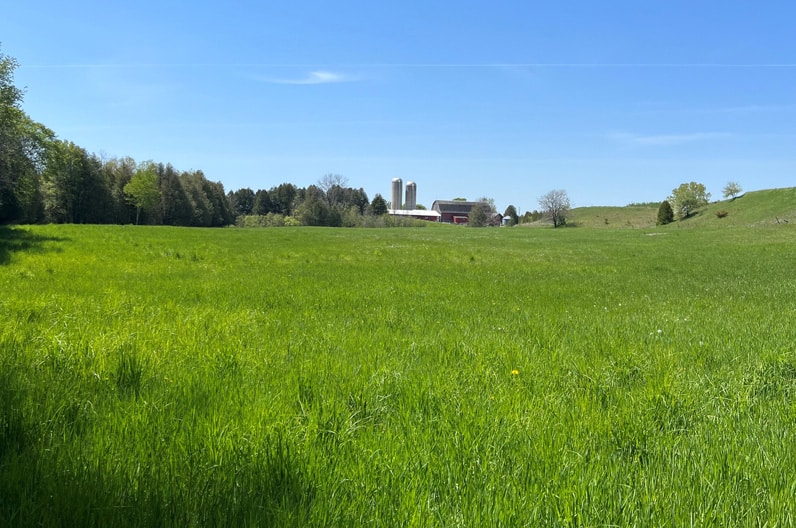
Bear Creek Nature Preserve
Ancient riverbanks and glacial stream
This 75-acre preserve — DCLT's first new Nature Preserve in over a decade — features 50-foot glacial riverbanks, naturally reproducing rainbow trout, and a landscape being restored from dairy farm to wild sanctuary.
Once a working dairy farm, Bear Creek Nature Preserve is now entering a new chapter — 75 acres of open grasslands, forested wetlands, and ancient riverbanks being restored to native habitat. It is DCLT’s first designated Nature Preserve in over a decade, and one of southern Door County’s most ecologically rich landscapes.
At the heart of the preserve flows Bear Creek, a perennial stream carved thousands of years ago by glacial meltwater. That ancient force shaped the striking 50-foot riverbanks that now define the valley, creating the cold, oxygen-rich waters that support naturally reproducing rainbow trout — a reliable indicator of a thriving aquatic ecosystem.
A new boardwalk and bridge gives access to a previously unexplored portion of the preserve, opening the wetland interior to visitors for the first time.
Trails
A 0.6-mile looped hiking trail follows level terrain through the forest and along the creek valley. The new boardwalk and bridge extend the experience into the wetland edge, where the glacial landscape feels especially present.
Terrain
Level throughout, suitable for hikers of all abilities.
Wildlife & Flora
As fields transition from farmland back to native grassland and forest, the preserve supports an expanding range of species. Look for Eastern Bluebirds in the open meadows, Monarch butterflies along the restored grassland edge, and crayfish in the clear shallows of Bear Creek. Badgers have been spotted in the upland areas. Mountain Maple and old-growth cedars anchor the forested wetland communities.
Water & Conservation
By protecting 0.6 miles of Bear Creek and its surrounding wetlands, upland forests, and grasslands, this preserve plays a direct role in maintaining water quality and wildlife corridors throughout southern Door. As rainwater filters through forest and wetland, it regulates nutrients and sediment — keeping the coldwater habitat clean for fish, birds, and the broader ecosystem downstream.
Trail Map & Gallery
Guidelines for Visiting
- Stay on trails
- Help protect fragile habitats by staying on marked trails.
- Clean your boots
- Brush off mud and seeds before and after your visit to prevent spreading invasive species.
- Pets on leash
- Dogs are welcome on leash. Please pick up after your pet.
- No collecting
- Leave wildflowers, plants, rocks, and artifacts where you find them.
- Leave no trace
- Carry out everything you carry in.
- No motorized vehicles
- Bicycles, ATVs, and other motorized vehicles are not permitted.
- No camping or fires
- Preserves are open dawn to dusk. No overnight camping or open fires.
- Hunting season
- During hunting season, wear blaze orange on preserves with active hunting. Learn more →