
Community Event
Native Plant Giveaway
Stop by and pick up free native trees and pollinator-friendly perennial plants — while supplies last! No registration required.
Download the 2026 plant guide (PDF) — full descriptions, growing conditions, and wildlife value for each species.
Native Trees (four species):
- Balsam Fir (Abies balsamea)
- Red Pine (Pinus resinosa) — new for 2026
- White Pine (Pinus strobus)
- White Spruce (Picea glauca)
Native Perennials (four species):
- Common Ironweed (Vernonia fasciculata)
- Golden Alexander (Zizia aurea)
- Marsh Blazing Star (Liatris spicata)
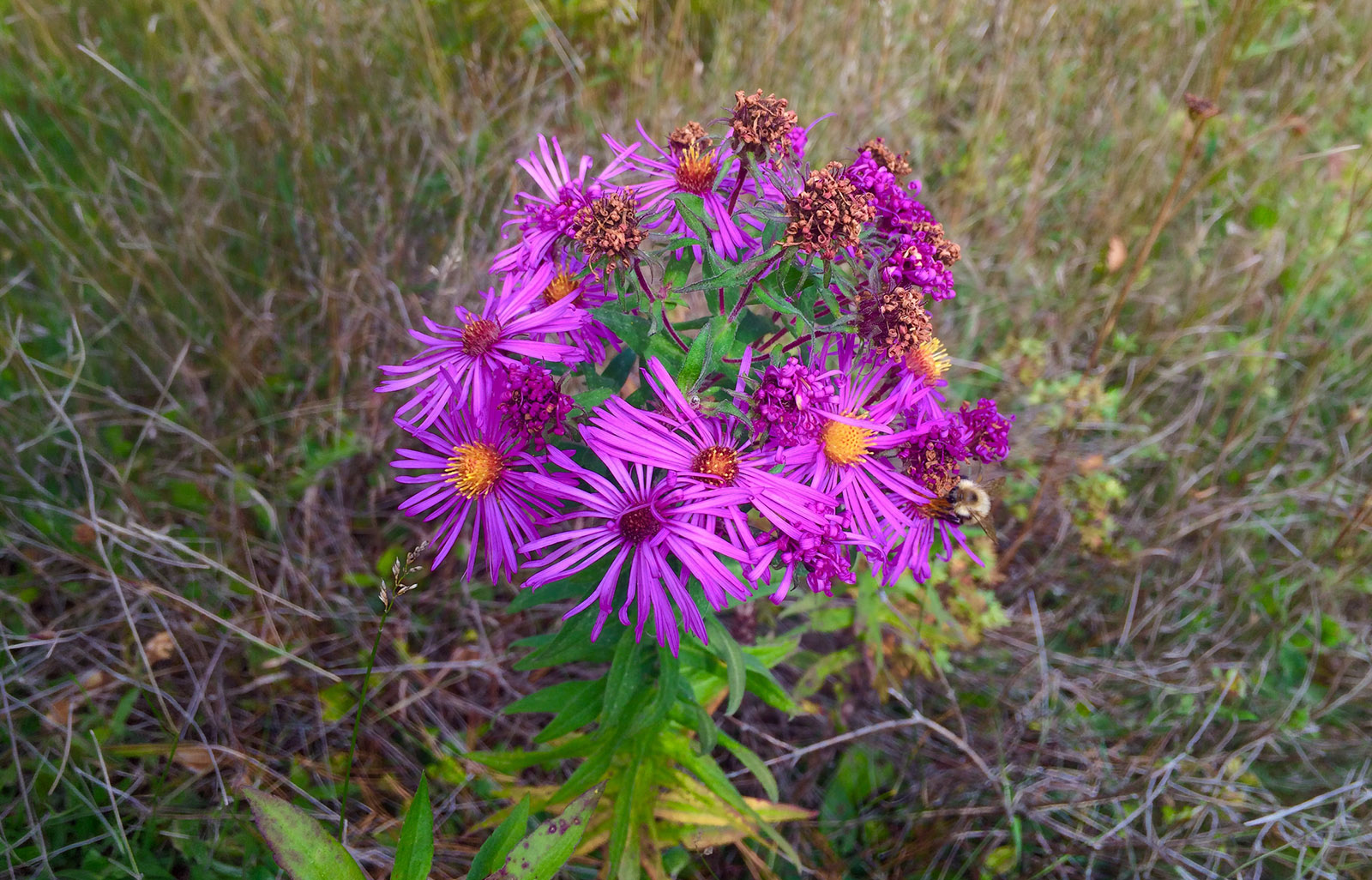
- New England Aster (Symphyotrichum novae-angliae)
What to Bring
- A wagon, cart, or sturdy boxes to carry plants home
- Gardening gloves (optional but handy)
- A water bottle — Door County mornings can warm up fast
Questions?
Email programs@doorcountylandtrust.org and Paige will get back to you.
Meet the 2026 Plants
Native Trees
Balsam Fir (Abies balsamea)
This native fir is an easy-to-grow tree, known for its blue-green foliage and evergreen aroma. The narrow, pyramid shape makes it a natural choice for windbreaks. It requires almost no care when used as a hedge or screen, only occasional waterings. And single trees soften house corners.
Mature size: 50 to 75 ft tall × 20-25 ft wide. Older trees develop an oval habit with lateral branches that start relatively low to the ground.
Sun: Full or partial sunlight. Newly started trees prefer a sheltered area for the first year of growth.
Soil: Prefers dry, loose, sandy soil with a low pH in full sun. Water consistently and slowly.
Wildlife value: The seeds and buds are food for birds including grouse, squirrels, mice and voles. Moose and white-tailed deer use the balsam fir for food, cover and shelter. The bark is browsed by black bears. Beavers occasionally use the wood for dam building.
Red Pine — Pinus resinosa, also called Norway Pine
Red Pine was an important lumber tree and is the common “plantation pine” in the upper Midwest, including in Door County. Its needles snap in half when bent — the only pine that does this — making identification easy. The 3 or 4-year-old needles turn yellow and drop in fall (seasonal needle drop). It produces short, stubby cones, and the bark on older trees becomes a patchwork of grays and rusty-oranges. Grows with Arborvitae (White Cedar) along the top of the Niagara Escarpment.
Mature size: Up to 80 ft tall × 40 ft wide
Sun: Full sun (does not tolerate shade)
Soil: Well-drained, even dry soils
Wildlife value: Provides shelter and nesting habitat for birds. Seeds are eaten by small mammals and birds. Offers year-round cover for wildlife.
Eastern White Pine (Pinus strobus)
Eastern white pine forests originally covered much of north-central and northeastern North America. Only one percent of the old-growth forests remain after the extensive logging operations of the 18th century to early 20th century. Mature trees are often 200–250 years old, and some live to over 400 years. The Native American Haudenosaunee denominated it the “Tree of Peace.”
Mature size: 50-80 ft tall × 20-40 ft wide
Sun: Full sun to partial shade. Prefers a minimum of four hours of direct, unfiltered sunlight each day.
Soil: Acidic, moist, well-drained and dry soils. Does best in moist soil, but can tolerate everything from dry, rocky ridges to bogs.
Wildlife value: Eastern white pine seeds are favored by black bears, rabbits, red squirrels and many birds, especially red crossbills. While potentially damaging to the trees, the bark is eaten by mammals such as beavers, snowshoe hares, porcupines, rabbits and mice. White pines provide nesting sites for many birds including woodpeckers.
White Spruce (Picea glauca)
A straight, tall tree easily recognized by its needles. Cones always hang down. Beautiful year-round color.
Mature size: 40-60 ft tall × 10-20 ft wide
Sun: Full sun is ideal — at least six hours of direct, unfiltered sunlight each day.
Soil: Acidic, loamy, moist, sandy, well-drained and clay soils. Has some drought tolerance.
Wildlife value: Besides providing nesting sites and shelter, white spruces provide food for many kinds of wildlife. Crossbills, evening grosbeaks and red-breasted nuthatches prefer the seeds. The foliage is eaten by grouse, rabbits and deer. Red squirrels cut open cones to eat the seeds, and they feast upon young, tender spruce shoots. The bark is enjoyed by both porcupines and black bears, sometimes to the detriment of the trees.
Native Perennials
Common Ironweed (Vernonia fasciculata)
Vernonia fasciculata is a Wisconsin native plant named for its tough stem. Ironweed has excellent upright form in the garden. The intense purple bloom color stands out in the late summer landscape, attracting many butterflies and other pollinators. While this tall stately plant occurs naturally in moist soils and tolerates brief flooding, it grows equally well in average garden soils. The plant height may be reduced by cutting back the stems in late spring. Ironweed can be an aggressive spreader by seed and may not be suitable for smaller settings, but is very effective in background borders, cottage gardens, rain gardens and wildflower meadows.
Bloom: Purple · July to September
Height: 4 to 6 feet
Sun: Full sun
Attracts: Butterflies
Golden Alexander (Zizia aurea)
Zizia aurea, commonly called golden Alexander, is a native perennial which occurs most often in small colonies in moist woods and meadows, thickets, glades and prairies. Features flat-topped clusters (compound umbels) of tiny yellow flowers in late spring atop stems growing to 3’ tall. Distinguished from other carrot family members by the absence of a flower stalk on the central flower of each umbel. Both basal and stem leaves are compound biternate with toothed leaflets. The similar Zizia aptera has simple, heart-shaped basal leaves.
Bloom: Yellow · May to June
Height: 1.5 to 3 feet
Sun: Full sun to part shade
Attracts: Butterflies
Marsh Blazing Star (Liatris spicata)
Liatris spicata, commonly known as blazing star, dense blazing star, or marsh blazing star, is a tall, upright, clump-forming perennial native to moist low grounds, meadows, and marsh margins in the Eastern United States. It typically grows 2-4 feet tall in cultivation, but can reach up to 6 feet in native habitats. It produces tall spikes (6-12”) of fluffy, red-purple flower heads that attract hummingbirds, butterflies, and other pollinators. The small seeds also appeal to songbirds.
Bloom: Red-purple, fluffy flower heads on tall stalks · July to August
Height: 2 to 4 feet
Sun: Full sun
Attracts: Birds, Hummingbirds, Butterflies
New England Aster (Symphyotrichum novae-angliae)
Symphyotrichum novae-angliae, commonly called New England aster, is a native perennial which occurs in moist prairies, meadows, thickets, low valleys and stream banks. It is a stout, leafy plant typically growing 3-6’ tall with a robust, upright habit. Features a profuse bloom of daisy-like asters (to 1.5” diameter) with purple rays and yellow centers from late summer to early fall. Rough, hairy, lance-shaped leaves (to 4” long) clasp stiff, hairy stems. Flowers are attractive to butterflies.
Bloom: Deep pink-purple · August to September
Height: 3-6 feet
Sun: Full sun
Attracts: Butterflies, Bees
More Programs to Explore
Other upcoming programs you might enjoy
Wisconsin Wildlife Presentation
Crossroads at Big Creek - Collins Learning Center Auditorium
The Wonders of Wetlands at Dusk
Oak Road Nature Preserve
The Natural and Human History of the Sturgeon Bay Ship Canal Nature Preserve
Sturgeon Bay Ship Canal Nature Preserve